Skip to content

✌🏼 Free shipping on orders over $150!

20-Minute Christmas Card and Tag Collage
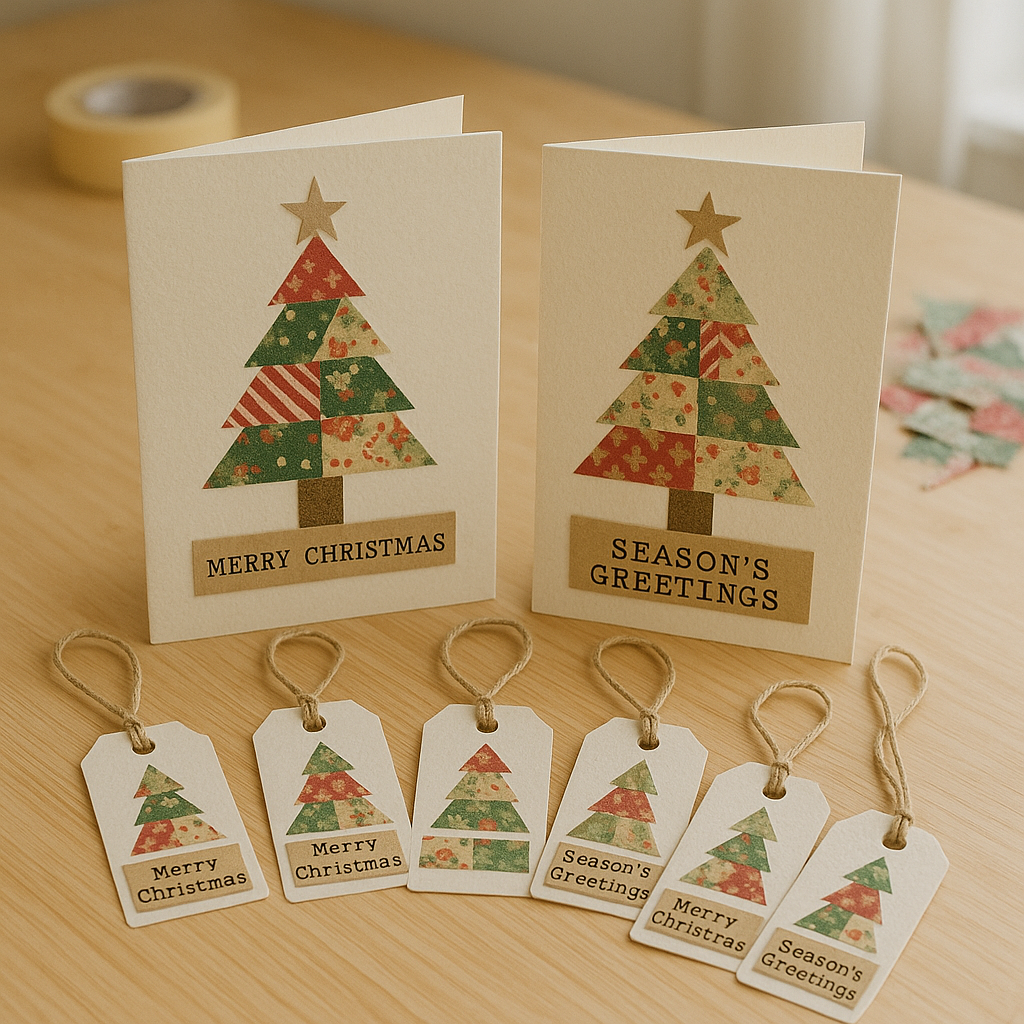
Set up a tiny “cardmaking station” and batch-make Christmas cards and gift tags fast.
This project uses simple collage layers, washi tape, and one stamped greeting for a polished look.
Great for families because everyone can take a role and the mess stays low.

Art Noise
Beginner - Family - 6+ (with adult help for cutting) -
Art Noise
Estimated Project Cost: $25+ / Estimated Time: 20 minutes / Christmas

Project At-a-Glance

What you are making: A batch of 3 handmade Christmas cards and 6 matching gift tags using quick paper collage and a simple stamped greeting.

Finished size (approx.): Cards: 5x7 in (or similar). Tags: 2x3 in (or similar).

Why it is fun: Everyone can take a role (cutting, sticking, stamping, tying string), and the results look polished without needing drawing skills.

What to expect

Space Required: Small table
Project Category:
Christmas
Project Type:

  • Gift Wrap and Tag Making Projects
  • Cardmaking Projects
  • Decorative Paper Collage Projects

Topics Covered:

Batch-making (cards + tags)
Simple collage layouts that look “designed”
Washi tape borders and layering
Stamping a clean greeting
Fast tag finishing (hole + string)
Kid-friendly roles and quick cleanup

Core Techniques:
paper folding, simple collage, washi tape layering, stamping, tag finishing
Tools:
scissors, pencil, ruler (optional), hole punch (optional), tape
Safety Notes:
Adult supervision for scissors and small pieces (choking risk for little kids).

Keep glue and ink away from eyes, wash hands after stamping.

If using a hole punch, keep fingers clear of the punch opening.

Art Noise

Materials and Tools

Required

  • 3 blank cards (or 3 sheets of cardstock to fold)
  • 6 tag bases (cardstock, recycled cereal box, or thick paper)
  • Decorative paper scraps (wrapping paper, old cards, coloured paper)
  • Glue stick
  • Washi tape (or regular tape plus coloured paper strips)
  • Black fineliner or marker
  • String or twine
  • Scissors

Optional upgrades

  • Letter stamp set and small ink pad
  • Stickers (stars, snowflakes, dots)
  • Metallic marker for highlights
  • Hole punch

Substitutions

  • No tag bases: cut rectangles from recycled cardboard, then cover the front with decorative paper.
  • No stamps: write “To:” and “From:” neatly with a fineliner, then add one small doodle (star, dot cluster, tiny tree).
  • No washi tape: use thin paper strips glued down, or fold regular tape over the edge as a border.

Cost notes

Use what you already have for paper scraps and string. Spend your budget on one “hero” item (a stamp set or special washi) to make everything look cohesive.

Art Noise

Step-by-Step Instructions

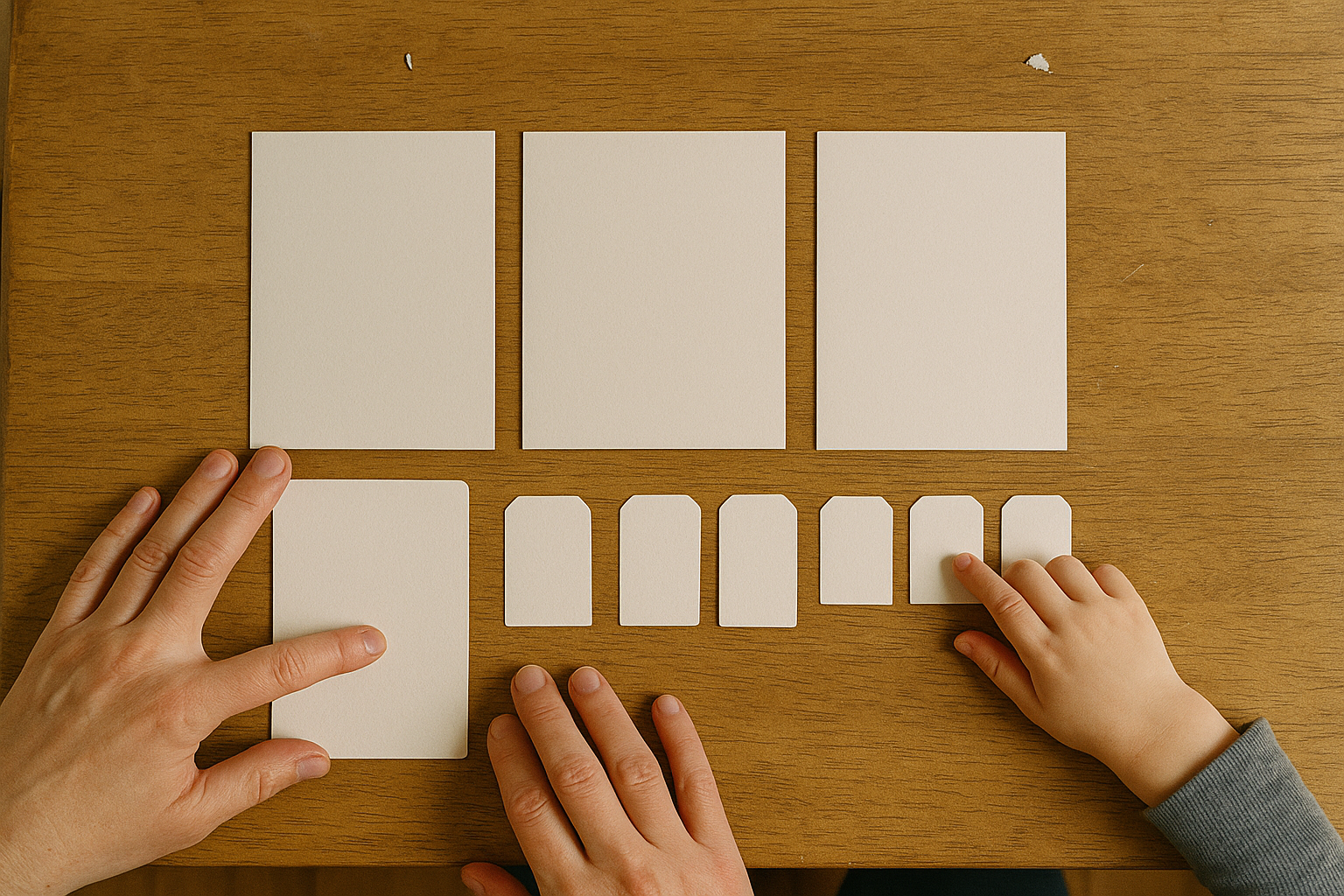
Step 1: Fold 3 sheets of cardstock into cards (about 5 x 7 in), or lay out 3 card blanks, then sharpen each crease with the edge of a ruler so they sit flat. You should see corners that line up cleanly when the cards are closed. Avoid skipping the crease, a puffy fold makes later layers look crooked.

Tip: Stack finished bases under a book for 1 minute to keep them crisp.

Step 2: Cut 6 tag bases about 2 x 3 in, and leave the top 1 cm clear for the hole. Tap the stack on the table to align the bottoms so they look like a matching set. Avoid making tags too small, you will run out of room for names.

Step 3: Add one strip of washi tape to each card front, placed 3–5 mm in from an edge and kept parallel to that edge, then add a shorter matching strip to each tag. You should see the pieces already feel coordinated before you add collage. Avoid stretching the tape as you apply it, stretched tape tends to wrinkle or lift later.

Step 4: Glue one large background shape onto each card, slightly off-centre, and glue one medium shape onto each tag, keeping that 1 cm clear top margin. Press from the centre outward so the paper lies flat, and you should see no bubbles or ripples. Avoid over-gluing, too much glue can buckle thin decorative paper.

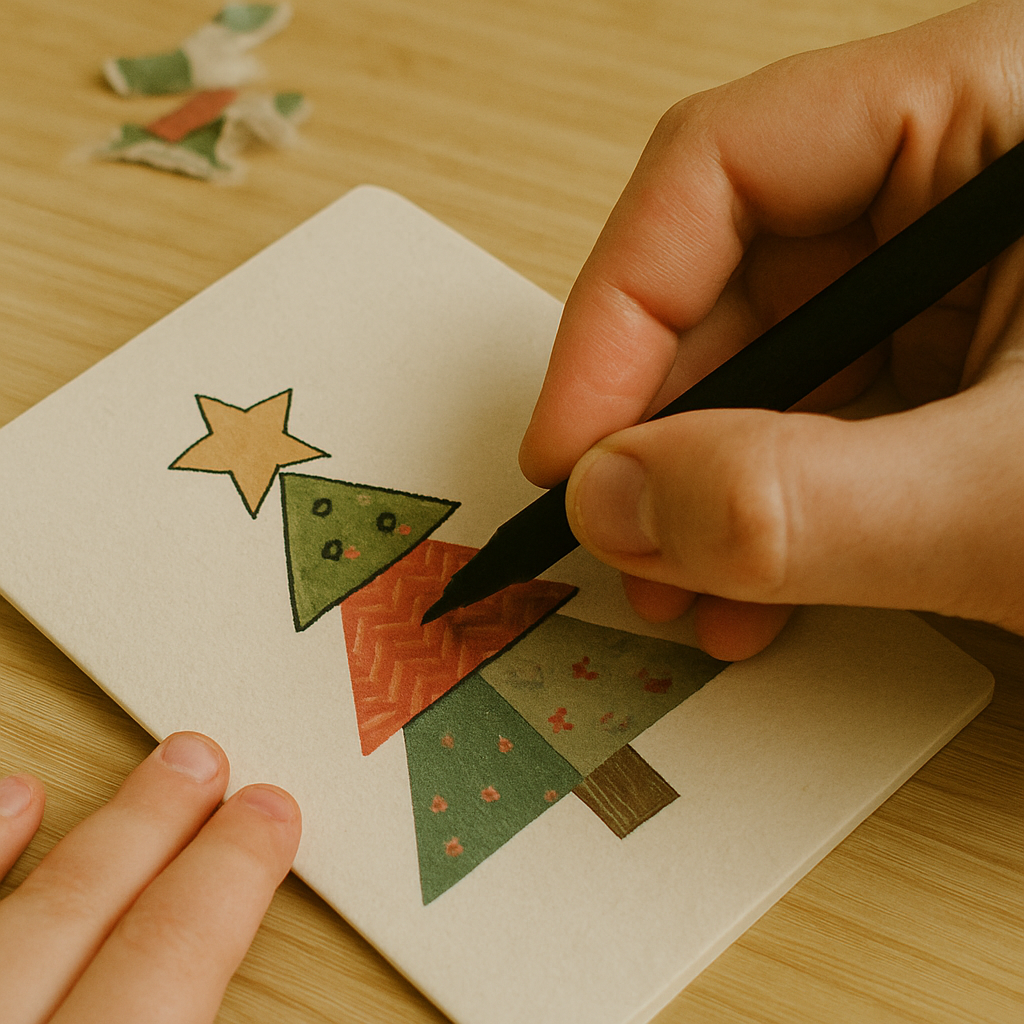
Step 5: Add one feature shape (tree, star, ornament, or present) to each card and tag, then overlap one small accent by about 2–3 mm so the cluster feels connected. Step back an arm’s length and you should see one clear focal point on each piece. Avoid scattering tiny accents far away from the main shape, it can look accidental instead of designed.

Step 6: Write or stamp the greeting on the cards and “To:” and “From:” on the tags, then let any stamped ink dry about 30 seconds before stacking. You should see crisp, readable text with a little blank space around it. Avoid stamping over thick glued layers, uneven surfaces often cause patchy ink.

Step 7: Punch a centred hole about 5 mm down from the top of each tag, then thread and tie string or twine and tug gently to test it. You should see the hole hold without tearing, and if it feels weak reinforce the back with a small piece of tape. Avoid punching too close to the edge, that is the most common reason tags rip on gifts.