Skip to content

✌🏼 Free shipping on orders over $150!

Air-Dry Clay Christmas Ornaments for Families
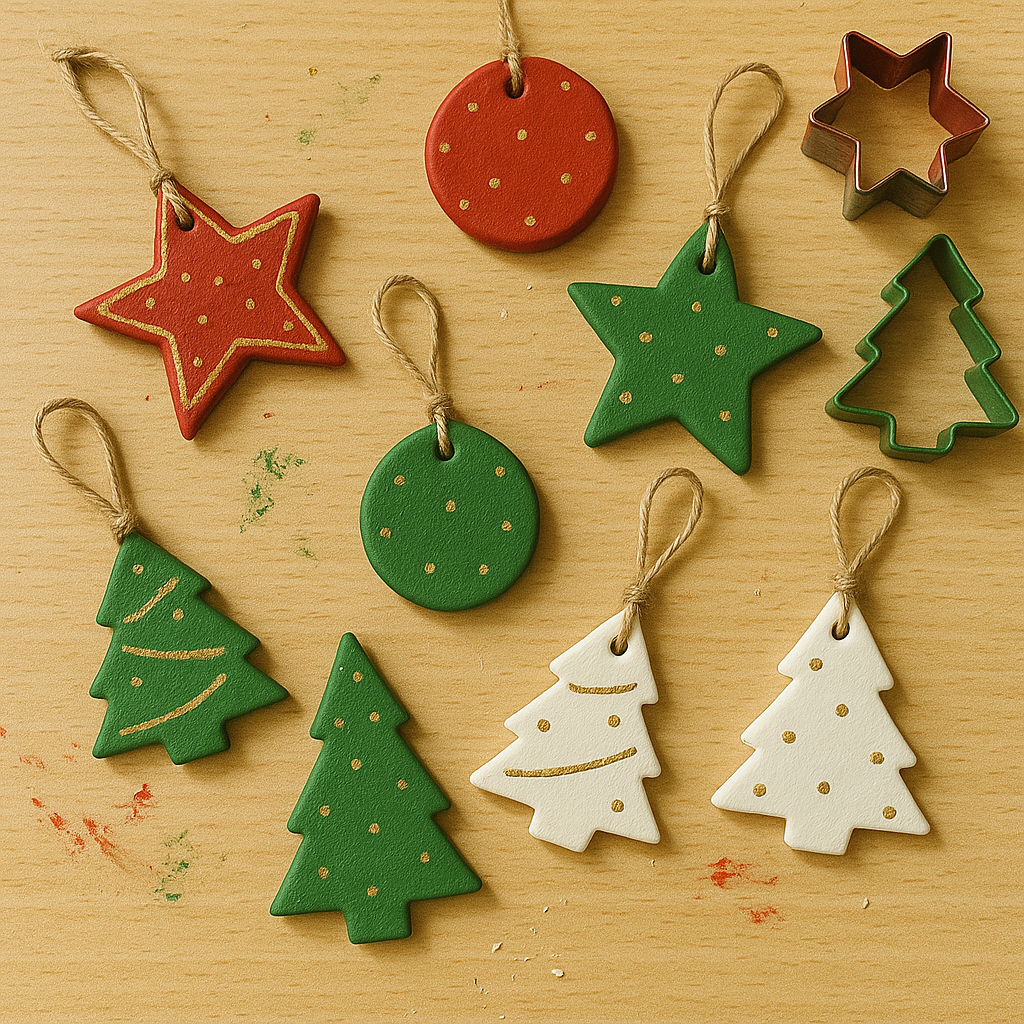
Make a batch of sturdy Christmas ornaments with air-dry clay and simple cookie cutters.
Kids can help with cutting, stamping texture, and painting, while adults handle drying and hanging holes.
You will end up with keepsake ornaments that look polished, even if your lines are a bit wobbly.

Art Noise
Beginner - Family - 5+ (with adult help for cutting and drying) -
Art Noise
Estimated Project Cost: Under $25 / Estimated Time: 60 minutes / Christmas

Project At-a-Glance

What you will make: A batch of air-dry clay Christmas ornaments (stars, trees, gingerbread shapes, or simple circles) with painted colour and optional metallic details.

Why it works: Rolling to a consistent thickness and punching a centred hanging hole are the two little steps that make these look tidy and actually survive on the tree.

Best for: Family crafting at the kitchen table, with one session for shaping and a second quick session the next day for painting.

What to expect

Space Required: Small table
Project Category:
Christmas
Project Type:

  • Modelling Clay Projects

Topics Covered:

How thick to roll air-dry clay for ornaments
How to punch a centred hanging hole that holds
Drying times, flipping, and preventing warping
Easy painting plan plus metallic finishing details
Simple ways to personalise with names and dates

Core Techniques:
rolling clay, cutting shapes, smoothing edges, hole punching, air-drying, painting, paint marker detailing
Tools:
rolling pin or smooth jar, cookie cutters, straw or skewer, butter knife, paintbrush, toothpick, tray or baking sheet
Safety Notes:
Small ornament pieces and ribbon can be a choking/entanglement risk, supervise young kids.

Adult help for sharp cutters, skewers, and any microwave shortcut.

Wash hands after crafting, keep clay and paint away from mouths and food prep areas.

Art Noise

Materials and Tools

Required

  • White air-dry clay (enough for 8–12 small ornaments)
  • Ribbon, twine, or embroidery floss for hanging (20–25 cm per ornament)
  • Acrylic paint (at least white, plus 1–3 colours)
  • Parchment paper (or a non-stick craft mat) for drying

Optional

  • Metallic paint marker for crisp gold lines and dots
  • Toothpick or skewer for names and dates
  • Clear acrylic sealer or varnish (only if you want extra durability)

Substitutions

  • No cookie cutters: cut a paper template (star, tree, circle) and trace around it with a butter knife.
  • No ribbon: use yarn, thin jute twine, or even a pipe cleaner for hanging.
  • No metallic marker: mix a tiny bit of white paint into your gold paint first, it makes metallics look brighter on clay.
Art Noise

Step-by-Step Instructions

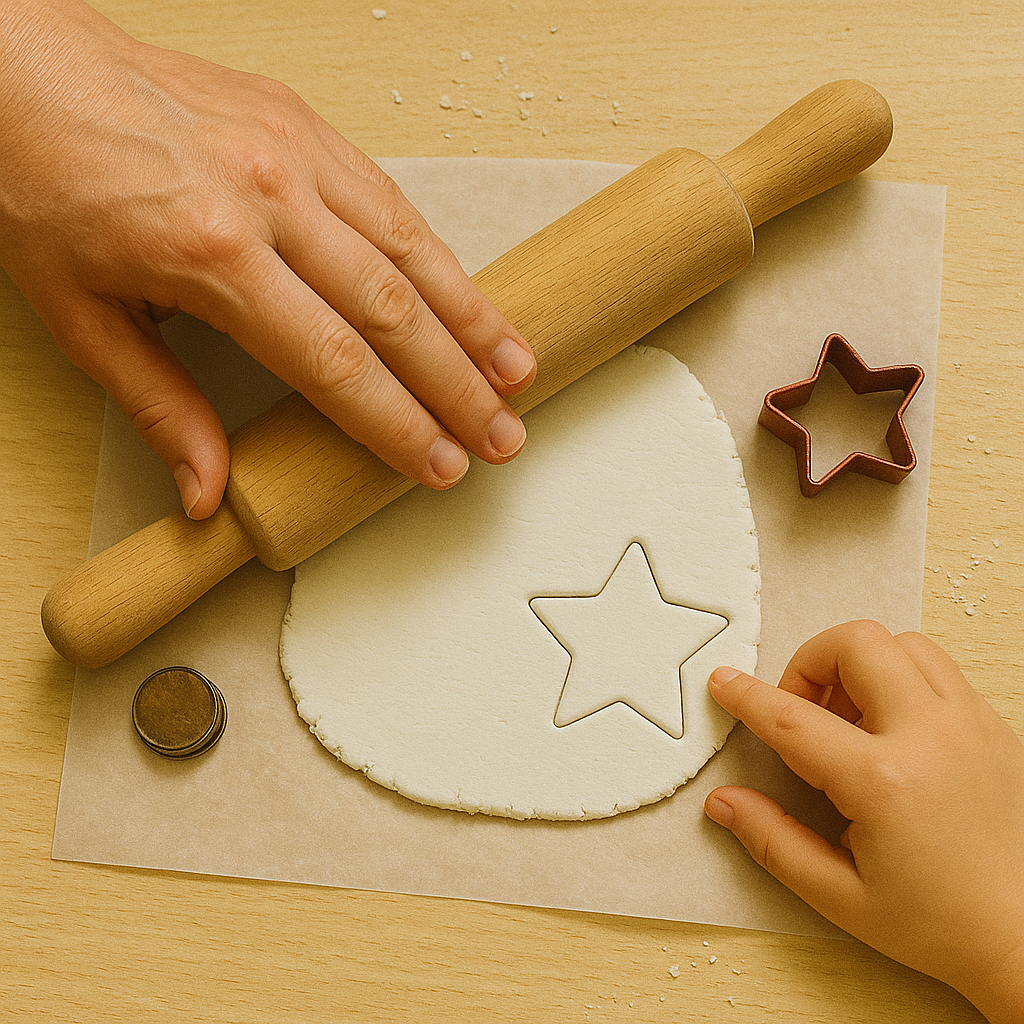
Step 1: Pinch off a workable piece of clay (about a golf ball sized chunk, roughly 25–35 g) and knead it for 30–60 seconds until it feels smooth and slightly warm in your hands. If you see dry lines forming, dampen one fingertip and rub the crack until it blends in.

Step 2: Roll the clay to about 6 mm thick (about the thickness of two stacked nickels) on parchment paper so it lifts easily later. You should see the surface look even and matte, with no ridges taller than a grain of rice.
Tip: If the clay sticks to your roller, place a second sheet of parchment on top and roll through it.


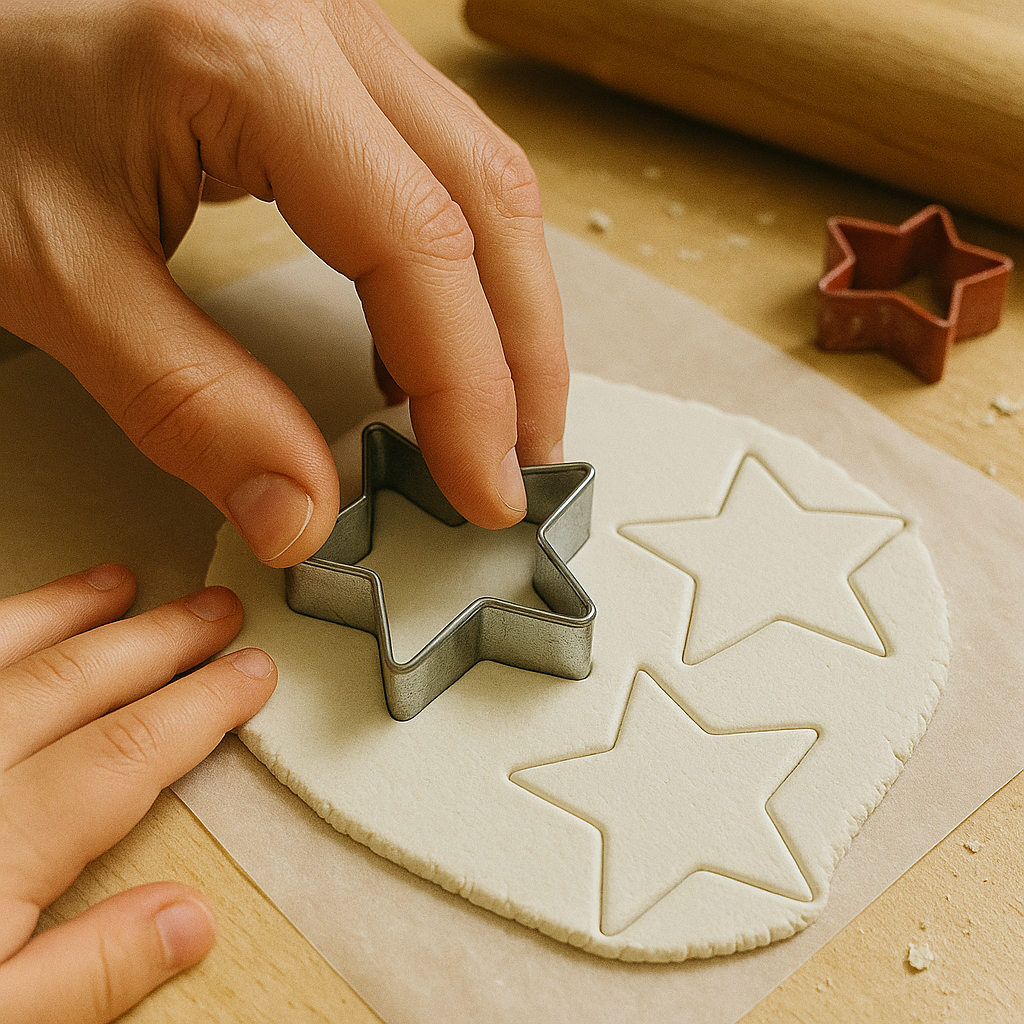
Step 3: Press cookie cutters straight down, then wiggle only 1–2 mm and lift, it keeps edges crisp. Smooth the cut edge with a damp fingertip, and you should see the outline go from jagged to clean in two or three passes.

Step 4: Punch a hanging hole with a straw or skewer about 8–10 mm from the top edge, aiming for the centreline so the ornament hangs straight. Avoid punching the hole closer than about 5 mm from the edge, because that thin bridge can crack when you tie the ribbon.
Tip: If you want names and dates, scratch them in now with a toothpick while the clay is soft and readable.

Step 5: Slide the ornaments (still on parchment) onto your tray and let them air-dry for 24 hours, flipping once around the 12-hour mark so both sides dry evenly. When they are ready to paint, they should feel room-temperature and hard all the way through, not cool or squishy in the middle.

Step 6: Paint a quick base coat (white works like “primer”) and let it dry about 15–20 minutes before adding colour layers. Finish with simple dots, lines, and borders using a metallic marker, then let everything dry another 30 minutes before threading ribbon through the hole.
Tip: If paint beads up, your layer is too wet, dab once with a dry brush and try again in 5 minutes.